
When I first started building with sandwich panels in Alberta, I made a costly mistake: I assumed all panels were created equal. A few winters later, after replacing a batch that buckled under snow load, I learned that Panel Installation & Specs are not just technical jargon; they are the difference between a structure that lasts decades and one that fails in a season. Whether you are a contractor, architect, or a DIY enthusiast, understanding the nuances of panel selection and installation in the Canadian context can save you thousands of dollars and countless headaches.
In this guide, I will walk you through the critical specifications you need to check before buying, the installation techniques that stand up to our harsh climate, and the common pitfalls I have seen on job sites from Vancouver Island to Newfoundland. By the end, you will have a clear roadmap to specify and install sandwich panels correctly.
Understanding Sandwich Panel Specifications
Sandwich panels consist of two rigid facings bonded to a lightweight core. The performance of the entire assembly depends on the synergy between these components. When you review Panel Installation & Specs, you need to look beyond the surface.
Core Materials: PIR vs. Mineral Wool
In Canada, the two most common core materials are polyisocyanurate (PIR) and mineral wool. PIR offers excellent thermal insulation with an R-value of about 6.5 per inch. However, it is combustible and can release toxic smoke in a fire. Mineral wool, on the other hand, is non-combustible and provides superior fire resistance, though its R-value is slightly lower at around 4.2 per inch. For high-risk areas like commercial kitchens or near fire-rated walls, mineral wool is often the safer choice.
From my experience, PIR is ideal for cold storage and temperature-controlled environments where thermal efficiency is paramount. Mineral wool shines in applications requiring fire ratings, such as schools and hospitals. Always check the local building code for your province; some regions have stricter fire regulations.
Thickness and R-Value
Panel thickness typically ranges from 50 mm to 200 mm. The thicker the panel, the higher the R-value, but also the higher the cost and weight. For Canadian winters, I recommend at least 100 mm for walls and 150 mm for roofs in most residential and commercial buildings. In extreme cold zones like Yukon or Northern Alberta, going up to 200 mm is not uncommon.
Remember that R-value alone does not tell the whole story. Thermal bridging through the panel joints can significantly reduce overall performance. That is why proper installation with thermal breaks is crucial.
Facings and Coatings
The facings are usually steel or aluminum, with a protective coating. For coastal areas, a high-quality PVDF coating resists salt spray and corrosion. Inland, a polyester coating may suffice. Always verify the coating warranty; some manufacturers offer up to 30 years.
Installation Best Practices for Canadian Climates
Installing sandwich panels in Canada requires attention to temperature fluctuations, snow loads, and wind uplift. Here are the steps I follow on every project.
Pre-Installation Checklist
- Verify panel dimensions and quantities against shop drawings.
- Inspect panels for damage during shipping; even minor dents can compromise the seal.
- Ensure all framing is straight, level, and plumb. A deviation of more than 5 mm can cause gaps.
- Check that flashing and trim pieces are on site and match the panel profile.
- Confirm the sealant is compatible with the panel coating and suitable for low temperatures.
Handling and Lifting
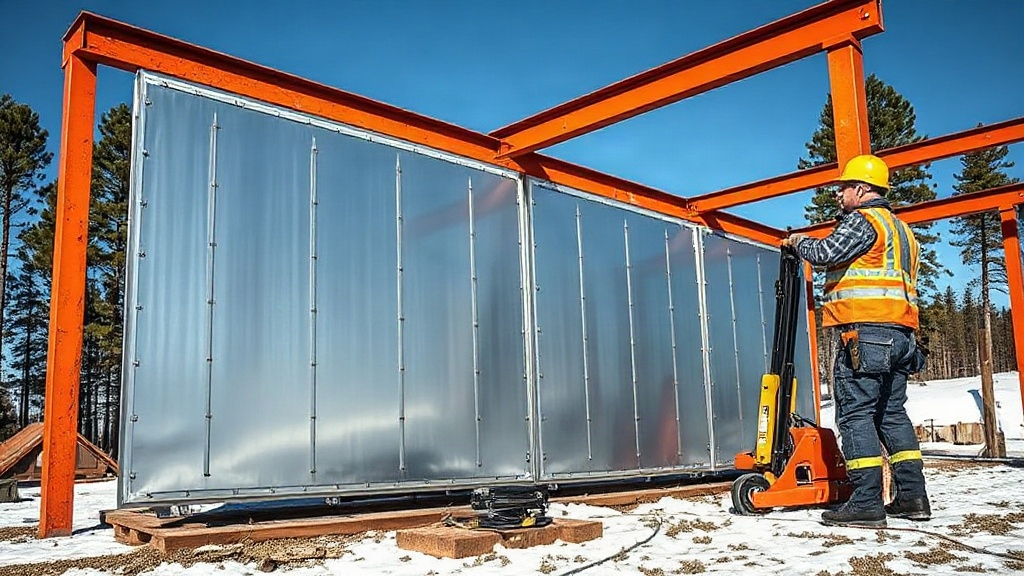
Panels are heavy and can be slippery. Use vacuum lifters or spreader bars to avoid bending. Never lift a panel by its edges without support; the core can crack. On windy days, wait it out. I have seen panels become sails and cause injuries.
Fixing and Fastening
Fasteners must be specified for the panel type and substrate. Self-drilling screws with EPDM washers are standard for steel-faced panels. Drive screws perpendicular to the panel, and do not over-tighten; the washer should be snug, not compressed to the point of dimpling the steel. For mineral wool cores, use screws with a wider thread to ensure grip.
Spacing of fasteners depends on wind load calculations. In high-wind zones, you may need fasteners at every rib. Always follow the manufacturer's engineering tables.
Sealing and Weatherproofing
Water infiltration is the enemy. Apply a continuous bead of high-quality silicone or butyl sealant in the panel joint before engaging the next panel. For roof panels, ensure laps face away from prevailing winds. In snow regions, use snow guards to prevent sudden slides.
Thermal movement is another consideration. Panels expand and contract with temperature changes. Use slotted holes or oversized washers to allow for movement without compromising the seal.
Roof and Wall Connections
At eaves, ridges, and corners, use pre-formed flashings. These should be designed to shed water and allow for thermal movement. I often see installers skip the closure strips at the eaves, leading to drafts and insect infiltration. Do not cut corners here.
Common Mistakes to Avoid
Even experienced builders can slip up. Here are the top errors I have encountered:
- Using the wrong sealant that hardens and cracks in cold weather.
- Not accounting for thermal expansion, resulting in buckled panels.
- Inadequate fastening, leading to wind uplift during storms.
- Ignoring manufacturer instructions for panel orientation.
- Failing to protect panels from UV exposure during storage.
Each of these can lead to premature failure and costly repairs. Always double-check your work.
Frequently Asked Questions
What is the minimum thickness for sandwich panels in Canada?
The minimum thickness depends on the application and climate zone. For walls in southern Canada, 50 mm may suffice for interior partitions, but for exterior walls, 100 mm is recommended. Roofs typically require 150 mm or more. Always consult local building codes and energy regulations.
Can I install sandwich panels over existing siding?
Yes, but you need to ensure the existing substrate is sound and can support the added weight. Also, you must address any moisture issues first; trapping moisture can lead to mold. It is often better to remove old siding to inspect for rot.
How do I prevent condensation in sandwich panels?
Condensation occurs when warm, moist air meets a cold surface. Ensure proper ventilation and use a vapor barrier on the warm side of the insulation. Also, seal all joints to prevent air leakage. In some cases, a desiccant may be needed in the core.
What is the fire rating of sandwich panels?
Fire ratings vary by core material. PIR panels typically achieve a Class B rating, while mineral wool panels can achieve Class A (non-combustible). Always check the manufacturer's certification and local fire codes.
How long do sandwich panels last?
With proper installation and maintenance, sandwich panels can last 30 to 50 years. The facings are usually the first to show wear, but coatings can extend life. Regular inspections and prompt repairs of any damage are key.
By paying attention to Panel Installation & Specs, you can ensure your building performs well for years to come. Take the time to specify correctly and install meticulously; your future self will thank you.