
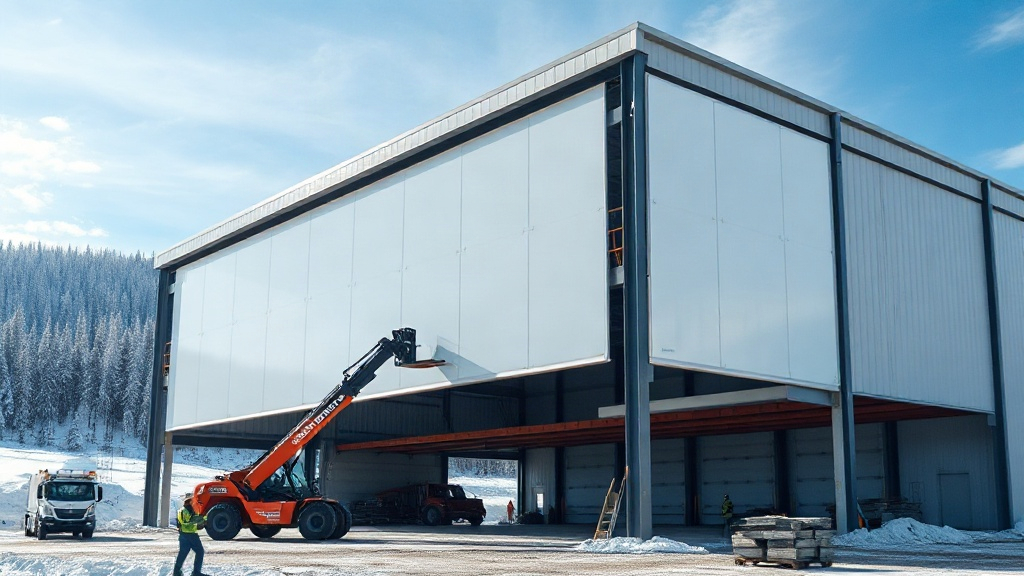
If you're planning a commercial building, cold storage facility, or even a modern home addition in Canada, you've likely heard about Sandwich Panels Canada. These prefabricated insulated wall systems have quietly become a go-to solution for builders who need speed, energy efficiency, and durability in one package. But what exactly are they, and why are they gaining so much traction from Vancouver to Halifax? This guide cuts through the marketing fluff and gives you practical, field-tested insights.
What Are Sandwich Panels?
A sandwich panel is a composite building material made of two rigid outer skins bonded to a lightweight insulating core. The skins are typically made of galvanized steel, aluminum, or sometimes fiberglass, while the core can be polyurethane (PUR), polyisocyanurate (PIR), expanded polystyrene (EPS), or extruded polystyrene (XPS). The result is a strong, lightweight panel that provides structural integrity, thermal insulation, and a finished surface all at once.
In Canada, these panels are especially popular for agricultural buildings, warehouses, cold storage, and retail spaces. They're also increasingly used in residential construction for accent walls and garage ceilings. The key advantage? You get insulation and cladding in a single step, which slashes labor time and reduces thermal bridging.
Why Choose Sandwich Panels in Canada?
Canada's climate is brutal. From -40°C winters in the Prairies to humid summers in Ontario, your building envelope has to perform year-round. Sandwich Panels Canada are engineered to handle these extremes. Here's why they make sense:
- Superior insulation: Polyurethane cores offer R-values up to R-8 per inch, far outperforming traditional batt insulation in the same thickness.
- Fast installation: Panels arrive pre-cut and ready to install. A crew can cover hundreds of square feet in a day, cutting project timelines by weeks.
- Durability: Steel skins resist moisture, pests, and mold. They won't rot, warp, or sag like wood framing.
- Energy savings: Tight joints and continuous insulation reduce air leakage, lowering heating and cooling costs.
- Design flexibility: Available in a range of colors, profiles, and thicknesses to match your aesthetic.
Types of Cores and Their Applications
Polyurethane (PUR) and Polyisocyanurate (PIR)
These are the top performers for thermal efficiency. PUR and PIR panels are commonly used in cold storage, food processing plants, and energy-efficient commercial buildings. PIR offers better fire performance and is often specified for high-risk areas. Expect to pay a premium, but the long-term energy savings can justify the cost.
Expanded Polystyrene (EPS)
EPS is the budget-friendly option. It offers decent insulation (around R-4 per inch) and is lightweight, making it easy to handle. However, it's more susceptible to moisture damage and has lower fire resistance. EPS panels are a good fit for temporary structures, agricultural buildings, and cost-sensitive projects.
Extruded Polystyrene (XPS)
XPS provides higher moisture resistance than EPS and slightly better R-value (around R-5 per inch). It's a solid middle ground for walls and roofs in humid climates. However, it's not as fire-resistant as PIR, so check local building codes.
Mineral Wool
For non-combustible requirements, mineral wool cores are the gold standard. They're heavier and more expensive, but they offer excellent fire resistance and sound dampening. Ideal for schools, hospitals, and high-occupancy buildings.
Installation: What to Expect
Installing sandwich panels is not a DIY job for the average homeowner. It requires precise handling, proper lifting equipment, and a crew that understands sealants and flashing details. Here's a simplified overview:
- Preparation: Ensure your structural frame is square, level, and plumb. Any misalignment will show up in the panel joints.
- Lifting: Panels are heavy and awkward. Use a telehandler or crane with a spreader bar to avoid bending the panels.
- Fastening: Panels are typically screwed into the frame through the outer skin. Use self-drilling screws with neoprene washers to create a watertight seal.
- Sealing: Apply high-quality silicone or butyl sealant to all joints. This is critical for weatherproofing and preventing air leakage.
- Flashing: Install flashings at openings, corners, and roof junctions to direct water away.
One pro tip: order panels with a factory-applied protective film. It prevents scratches during installation and peels off cleanly afterward. Also, store panels indoors or under a tarp before installation; moisture can compromise the core.
Cost Considerations
Sandwich panels are not cheap upfront. In Canada, expect to pay between $25 and $60 per square foot installed, depending on core material, thickness, and finish. EPS is at the lower end, while PIR and mineral wool are higher. However, when you factor in reduced labor, faster build time, and lower energy bills, the total cost of ownership often beats traditional stick-built walls. For a 2,000 sq ft warehouse, you might save $10,000 to $20,000 in labor alone.
Also, check for local incentives. Some provinces offer rebates for energy-efficient building envelopes, which can offset the initial investment.
Building Codes and Compliance
In Canada, sandwich panels must meet the National Building Code (NBC) and provincial codes. Key considerations include fire rating, structural load, and thermal performance. For fire, you'll need to ensure the panel assembly meets the required fire-resistance rating (e.g., 1-hour or 2-hour). This often means using mineral wool cores or adding a fire-rated gypsum board on the interior. Always consult a local engineer or building official before specifying panels.
Common Mistakes to Avoid
- Ignoring thermal bridging: Use thermal breaks at connections to prevent heat loss.
- Poor sealing: Skipping sealant or using the wrong type can lead to leaks and condensation.
- Overlooking expansion: Panels expand and contract with temperature changes. Allow for movement at joints.
- Choosing the wrong core: Don't use EPS in a high-humidity environment; it will absorb moisture and lose R-value.
Frequently Asked Questions
How long do sandwich panels last in Canadian weather?
With proper installation and maintenance, high-quality sandwich panels can last 30 to 50 years. The steel skins are coated with protective finishes like polyester or PVDF, which resist corrosion and UV damage. Regular inspections and touch-ups of scratches will extend their life.
Can sandwich panels be used for residential homes?
Yes, they are increasingly used in residential construction, especially for modern, energy-efficient homes. They can be used for walls, roofs, and even interior partitions. However, check local zoning and building codes, as some areas have restrictions on exterior finishes.
What is the R-value of a typical sandwich panel?
R-values vary by core material and thickness. Polyurethane panels typically range from R-6 to R-8 per inch, while EPS is around R-4 per inch. A 4-inch PUR panel can achieve R-24 to R-32, making it highly efficient.
Are sandwich panels environmentally friendly?
They can be. Many manufacturers now offer panels with recycled content and low-VOC finishes. The energy savings over the building's life often outweigh the embodied carbon. However, disposal at end-of-life can be a challenge, so choose recyclable options when possible.
How do I find a reputable sandwich panel supplier in Canada?
Look for suppliers with a proven track record, positive reviews, and certifications like ISO 9001. Ask for references from similar projects and ensure they provide technical support and warranties. Local suppliers can reduce shipping costs and lead times.