
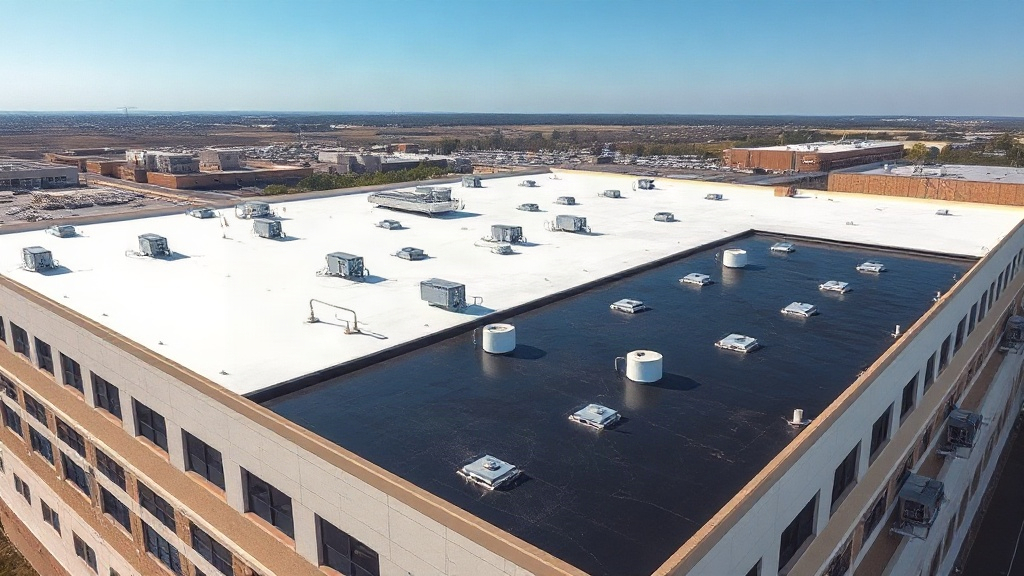
When you're responsible for a commercial building, the roof over your head is more than just a cover—it's a critical asset that protects your inventory, your employees, and your bottom line. Unlike residential roofs, commercial roofing systems must withstand heavy foot traffic, harsh weather, and the constant demand of a business environment. Choosing the right system and maintaining it properly can mean the difference between a minor repair and a major capital expense. In this guide, we'll walk through the key considerations for selecting, installing, and caring for commercial roofing systems, drawing on practical experience from projects across Canada.
Understanding Commercial Roofing Systems
Commercial roofing systems encompass a range of materials and designs engineered for flat or low-slope roofs, which are common on commercial buildings. These systems are built to handle ponding water, thermal cycling, and UV exposure while providing insulation and structural integrity. The most common types include single-ply membranes, built-up roofs, modified bitumen, and metal roofing. Each has its own strengths and ideal applications, so it's essential to match the system to your building's specific needs.
Single-Ply Membranes: TPO and EPDM
Single-ply membranes are popular for their ease of installation and cost-effectiveness. TPO (thermoplastic polyolefin) is known for its heat-welded seams and energy-efficient white surface, which reflects sunlight and can reduce cooling costs. EPDM (ethylene propylene diene monomer) is a synthetic rubber that offers excellent weather resistance and flexibility in cold temperatures. Both are lightweight and can be installed in large sheets, minimizing seams and potential leak points. However, TPO can be prone to punctures, while EPDM may require adhesives that are sensitive to application conditions.
Built-Up Roofing (BUR)
Built-up roofing, often called tar and gravel, has been a staple for over a century. It consists of multiple layers of bitumen and reinforcing fabrics, topped with a surfacing material like gravel or a cap sheet. BUR is renowned for its durability and redundancy—if one layer fails, others can still protect the building. However, installation is labor-intensive and involves hot bitumen, which can be hazardous. Modern variations use cold-applied adhesives for safer application.
Modified Bitumen
Modified bitumen roofs are an evolution of BUR, using polymer-modified asphalt to enhance flexibility and weather resistance. They come in rolls and can be applied with torching, self-adhering, or cold adhesives. This system is a good middle ground: it offers the toughness of asphalt with improved elongation, making it suitable for areas with temperature swings. Proper installation is key, as seams can be vulnerable if not properly sealed.
Metal Roofing
Metal roofing is increasingly chosen for its longevity and sustainability. Standing seam metal roofs feature raised seams that hide fasteners and allow for thermal movement. They can last 40 years or more and are highly reflective when coated with cool-roof pigments. Metal roofs are also lightweight, which can reduce structural load. The main drawbacks are higher upfront cost and the potential for noise during rain or hail, though insulation can mitigate that.
Factors to Consider When Choosing a System
Selecting a commercial roofing system isn't a one-size-fits-all decision. You need to evaluate several factors to ensure you get the best performance for your investment.
Building Use and Load Requirements
What happens inside your building affects the roof. If you have heavy HVAC equipment, solar panels, or frequent foot traffic, you'll need a system that can support those loads. For example, a roof with a lot of equipment may benefit from a reinforced membrane or a paver system to protect the membrane. Also, consider future needs: if you plan to add solar, a metal roof or a reinforced single-ply might be more compatible.
Climate and Weather Exposure
In Canada, roofs face extreme temperature fluctuations, snow loads, and freeze-thaw cycles. A system that performs well in mild climates may fail in harsher conditions. For cold regions, EPDM and modified bitumen are often preferred for their flexibility. In areas with high UV exposure, reflective TPO or metal roofs can reduce heat gain. Wind uplift is another concern; in coastal or open areas, you need a system with high wind resistance, which often means mechanically attached or adhered systems with proper edge details.
Energy Efficiency and Sustainability
Energy costs are a major operating expense. Cool roofs, which reflect solar radiation, can lower cooling demand. TPO and metal roofs with reflective coatings are good choices. Additionally, some systems incorporate insulation that improves thermal performance. If sustainability is a goal, consider recycled content (some metal roofs) or recyclability at the end of life. Also, look for systems that can accommodate green roofs or solar panels if you plan to go that route.
Budget and Lifecycle Cost
The upfront cost is only part of the picture. A cheaper system might need more maintenance and have a shorter lifespan, costing more over time. Calculate the lifecycle cost, including installation, maintenance, repairs, and eventual replacement. For example, a metal roof might cost more initially but last twice as long as a single-ply, making it more economical in the long run. Also, check warranty terms: a good warranty can protect your investment, but it often requires professional installation and regular maintenance.
Installation Best Practices
Even the best materials can fail if installed incorrectly. Here are some key practices to ensure a successful installation.
Proper Surface Preparation
The substrate must be clean, dry, and structurally sound. Any existing roof should be inspected for moisture, and if there's a tear-off, the deck must be repaired. For recover installations, ensure the old roof can support an additional layer and that it's compatible with the new system. Moisture trapped between layers can cause premature failure.
Attention to Detail
Details like flashing, drains, and penetrations are where leaks often start. Use high-quality flashing materials and ensure proper sealing. For single-ply, heat-welded seams should be tested for integrity. In BUR and modified bitumen, proper lap and bleed-out are crucial. Don't cut corners on edge metal and termination bars; they anchor the system and prevent wind uplift.
Quality Control During Installation
Hire experienced contractors who follow manufacturer specifications. During installation, conduct regular inspections to catch issues early. For example, check seam strength on TPO with a seam probe, and ensure adhesives are applied at the correct rate. After installation, a flood test or infrared scan can verify watertightness. Remember, most warranties require installation by certified professionals, so verify credentials.
Maintenance Strategies for Longevity
Regular maintenance is the key to maximizing the lifespan of any commercial roofing system. A proactive approach can prevent small problems from becoming major headaches.
Routine Inspections
Schedule inspections at least twice a year, ideally in spring and fall. Look for signs of damage: cracked or blistered membranes, loose flashing, ponding water, or debris. After severe storms, do a quick check. Keep a log of inspections and repairs; this documentation can be useful for warranty claims.
Cleaning and Debris Removal
Remove leaves, branches, and other debris from drains and gutters to prevent water backup. On gravel-surfaced roofs, ensure gravel is evenly distributed to protect the bitumen. For reflective roofs, clean off dirt to maintain energy performance. Avoid using harsh chemicals that could damage the membrane.
Timely Repairs
Address small issues immediately. A minor tear in a single-ply can be patched easily, but if ignored, it can lead to widespread water damage. For BUR, a small crack can be sealed with roof cement. Keep a supply of repair materials on hand, or have a contractor on call. Regular maintenance can extend the life of your roof by 5 to 10 years, delaying costly replacement.
Common Pitfalls to Avoid
Many building owners make mistakes that shorten roof life. Here are a few to watch out for.
- Ignoring drainage: Ponding water adds weight and accelerates deterioration. Ensure drains and scuppers are clear and properly sized.
- Using incompatible materials: Mixing different roofing products can cause chemical reactions. Always consult a professional before repairs.
- Skipping professional inspections: DIY inspections might miss subtle issues. A certified roofer can spot problems you might overlook.
- Deferring maintenance: Postponing repairs to save money now often leads to higher costs later.
Frequently Asked Questions
How long does a commercial roofing system typically last?
Lifespan varies by material: single-ply membranes last 15-20 years, modified bitumen 20-25 years, BUR 20-30 years, and metal 40+ years. Proper installation and maintenance can extend these ranges.
What is the best commercial roofing system for cold climates?
EPDM and modified bitumen perform well in cold due to their flexibility. Metal roofs also handle freeze-thaw cycles effectively. Insulation and proper ventilation are critical regardless of material.
Can I install a new roof over an existing one?
Sometimes, a recover is possible if the existing roof is structurally sound and not too wet. However, building codes may limit the number of layers. A tear-off is often recommended for a fresh start.
How often should I schedule roof maintenance?
At least twice a year, plus after major storms. Regular maintenance is essential to uphold warranties and catch issues early.
What are the signs that my commercial roof needs replacement?
Look for widespread leaks, sagging, numerous patches, or a roof that's over 20 years old. If repair costs exceed 30% of replacement, it's usually time to replace.
Choosing and caring for commercial roofing systems is a long-term investment. By understanding your options, focusing on quality installation, and committing to regular maintenance, you can protect your building and your budget for years to come.