
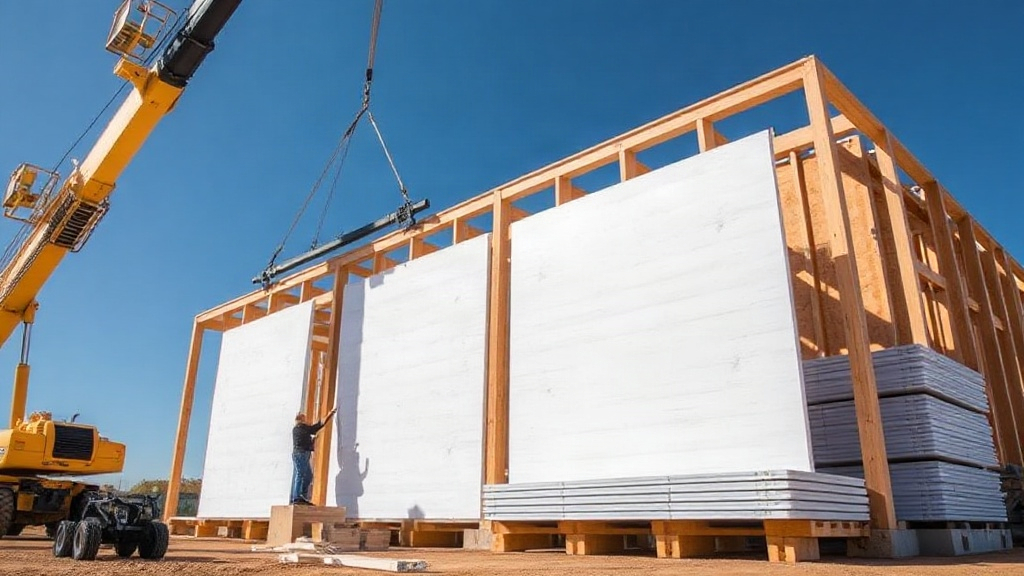
When you're on a job site, the difference between a smooth panel install and a callback often comes down to the details you nailed down before the first screw went in. Panel Installation & Specs isn't just a line item on a drawing; it's the foundation of a building that performs for decades. Whether you're enclosing a cold storage warehouse in Ontario or a retail space in Alberta, understanding the specs and following best practices will save you time, money, and headaches.
Why Specs Matter More Than You Think
Sandwich panels are engineered systems, not just sheets of metal and foam. Each component, from the steel facings to the insulation core, is designed to work together. Ignoring the specs is like putting premium fuel in a diesel engine: it might run, but not for long.
Key specs to check before you order:
- Thickness: Ranges from 50 mm to 200 mm. Thicker panels mean higher R-value but also more weight and cost.
- Insulation core: Polyisocyanurate (PIR), polyurethane (PUR), or mineral wool. Each has different fire ratings and thermal performance.
- Steel gauge: Typically 26 to 24 gauge. Thinner gauges can dent easily; thicker gauges add weight.
- Joint type: Hidden or exposed fasteners. Hidden joints offer a cleaner look but require precise installation.
At Sandwich Panels Canada, we've seen projects where underspecced panels led to condensation issues and costly retrofits. So, take the time to match the panel to the environment.
Choosing the Right Panel for Your Climate
Canada's climate is brutal on buildings. From -40°C in the Prairies to coastal rain in BC, your panel choice must account for temperature swings, moisture, and wind loads.
Thermal Performance
R-value measures resistance to heat flow. For cold storage, you might need R-40 or higher, which means 150 mm PIR panels. For a typical warehouse, R-20 (100 mm) often suffices. But don't just look at the number; consider thermal bridging at joints. A continuous insulation layer is key.
Fire Ratings
Mineral wool cores offer superior fire resistance (non-combustible) and are often required for high-occupancy buildings. PIR and PUR have lower fire ratings but can be treated with fire retardants. Always check local building codes.
Moisture Management
In humid areas, condensation inside the panel can degrade insulation. Look for panels with vapor barriers and proper sealing. Also, ensure the panel's surface coating (e.g., PVDF) can handle UV and salt spray if near the coast.
Installation Best Practices: From Layout to Lift
Even the best panel fails if installed poorly. Here's how to get it right.
1. Pre-Installation Planning
Before any panel arrives, verify the substrate. Is the foundation level? Are the structural supports aligned? A 5 mm deviation can cause gaps. Use a laser level to check. Also, map out panel layout to minimize cuts and waste. Remember, panels are directional; the tongue-and-groove joint must face the correct way.
2. Handling and Storage
Panels are heavy and can be damaged. Store them on a flat, elevated surface, not on the ground. Use spreader bars when lifting with a crane to avoid bending. And never drag panels; they'll scratch.
3. Fastening Techniques
Fasteners are the weak link. Use self-drilling screws with EPDM washers. Drive them perpendicular to the panel, not at an angle. Over-tightening crushes the insulation; under-tightening leaves gaps. For hidden joints, engage the tongue fully before screwing. A common mistake is to start at one end and work across; instead, start at the center and work outward to distribute stress evenly.
4. Sealing and Weatherproofing
Apply sealant at all joints, especially at the base and top. Use a high-quality silicone or polyurethane caulk. For exposed fasteners, place a bead of sealant over each screw head. Don't forget expansion joints every 6-8 meters to allow for thermal movement.
Common Mistakes and How to Avoid Them
We've inspected countless installations, and these errors pop up repeatedly:
- Ignoring thermal expansion: Panels expand and contract. Without expansion joints, buckling occurs.
- Improper lifting: Using forklifts without spreader bars can kink panels.
- Wrong sealant: Using a sealant that doesn't adhere to the panel's coating leads to leaks.
- Inadequate training: Crews unfamiliar with sandwich panels may overtighten screws or misalign joints.
Avoid these by reading the manufacturer's installation manual and, if possible, attending a training session. Many suppliers, including us, offer on-site support.
Real-World Example: A Cold Storage Facility in Manitoba
Last year, a client needed a 200 mm PIR panel system for a freezer at -25°C. The specs called for R-45 and a vapor-tight envelope. During installation, we noticed the contractor was using standard screws instead of thermal breaks, which would cause condensation. We switched to screws with plastic caps and added a vapor barrier tape at joints. The result: energy bills dropped by 15% in the first year. This shows how specs and installation go hand in hand.
Maintenance and Longevity
Once installed, panels are relatively low-maintenance. But periodic inspections are wise. Check for loose fasteners, sealant degradation, and dents. Clean with mild soap and water; avoid abrasive cleaners. If you spot a small puncture, repair it immediately with a patch kit to prevent moisture ingress.
Frequently Asked Questions
What thickness of sandwich panel do I need for a cold storage room?
For temperatures around -20°C, a 150 mm PIR panel (R-30) is typical. For -30°C or lower, go with 200 mm (R-40). Always calculate based on your specific temperature differential and local codes.
Can I install sandwich panels over existing siding?
Yes, but you need to ensure the substrate is sound and flat. Often, you'll need to add furring strips to create a level plane. Also, check for moisture trapped between layers; a vapor barrier may be necessary.
How do I prevent condensation on the inside of panels?
Condensation happens when warm, moist air meets a cold surface. Ensure proper sealing and consider adding a vapor barrier on the warm side. Also, ventilation in the building helps.
What's the difference between PIR and PUR panels?
PIR (polyisocyanurate) has a higher fire resistance and slightly better thermal performance than PUR (polyurethane). PIR is often preferred for commercial buildings due to stricter fire codes.
How long does installation take?
For a crew of four, expect to install about 100-150 square meters per day, depending on complexity. Proper planning and equipment can speed this up.
Getting Panel Installation & Specs right is a blend of art and science. With the right panels and careful workmanship, you'll build structures that stand up to Canada's toughest conditions. For more guidance, reach out to the experts at Sandwich Panels Canada.